


Working with multi-page PDFs usually means a lot of switching—between tabs, between documents, and between tools.
Mark up an architectural drawing while referencing the spec speech and you're constantly clicking back and forth. Grading a paper requires jumping between the submission and your rubric with each question or section. Cross-referencing contract versions means constantly reorienting yourself every time you switch so you don’t miss important details.
Drawboard PDF gives you a better way. With Multi-Window, Document Builder, the Pages Panel, and Advanced Paste, you can view, edit, rearrange, annotate, and manage multiple PDF pages at once—all from a single app.
Here’s how each feature works and when to use it.
Multi-Window lets you open more than one Drawboard PDF canvas at the same time. Each window operates independently, with access to the full markup toolset—pressure-sensitive ink, annotations, shapes, text, and more.
Multi-Window is available for Pro Plus, Pro Unlimited, and Enterprise users in the Windows app. You can also simulate Multi-Window with two separate instances of Drawboard PDF in your web browser or using Split Screen on your iPad.
There are two quick ways to open a new window:
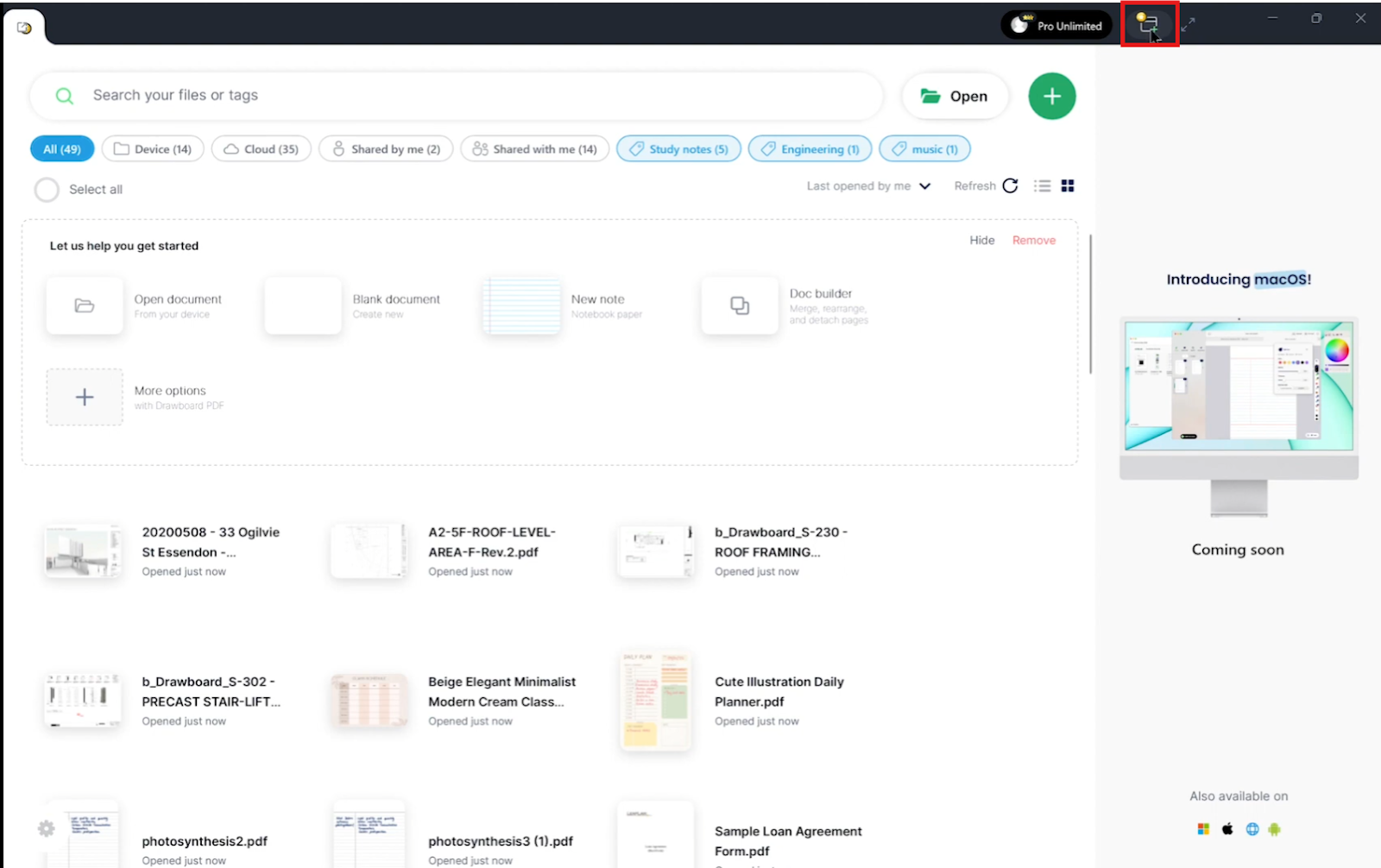
A new Drawboard PDF window will open with your Dashboard in view. From there, open whatever document you need.
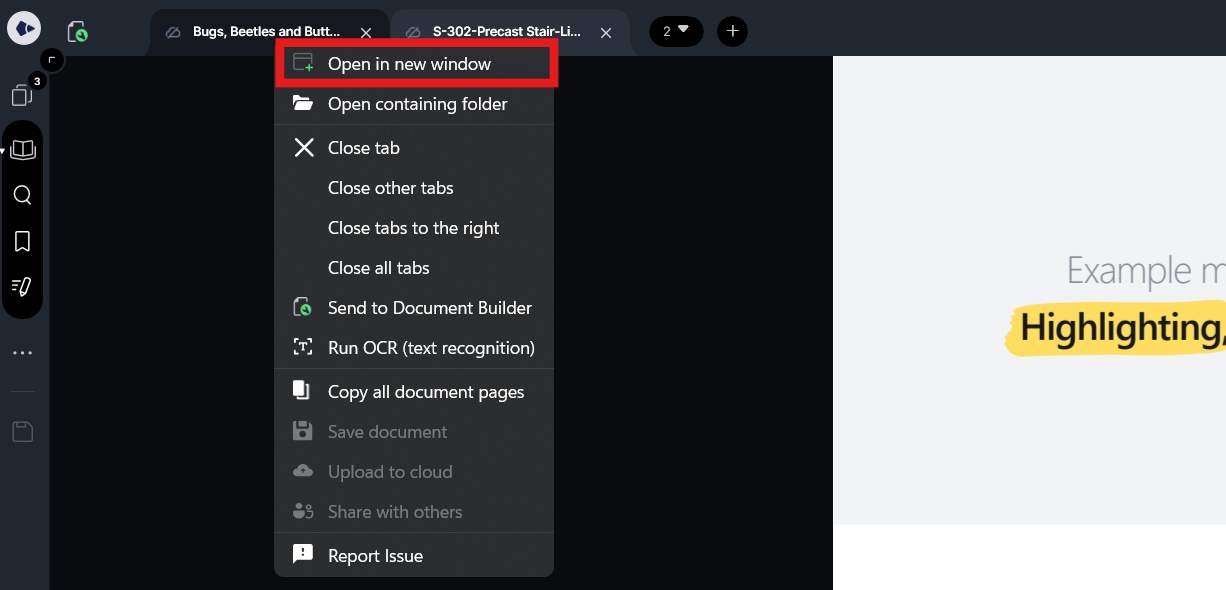
You can also open a specific tab into its own window: right-click the tab in the top menu and select Open in New Window. Or tap the plus icon in the top menu and choose Open in New Window.
Once you have two or more windows open, arrange them for maximum visibility. Use the Windows snap feature (press the Windows key + Left or Right arrow) to split your screen into halves. If you’re working on two monitors, drag each window to a separate display for a full-screen view of both documents.
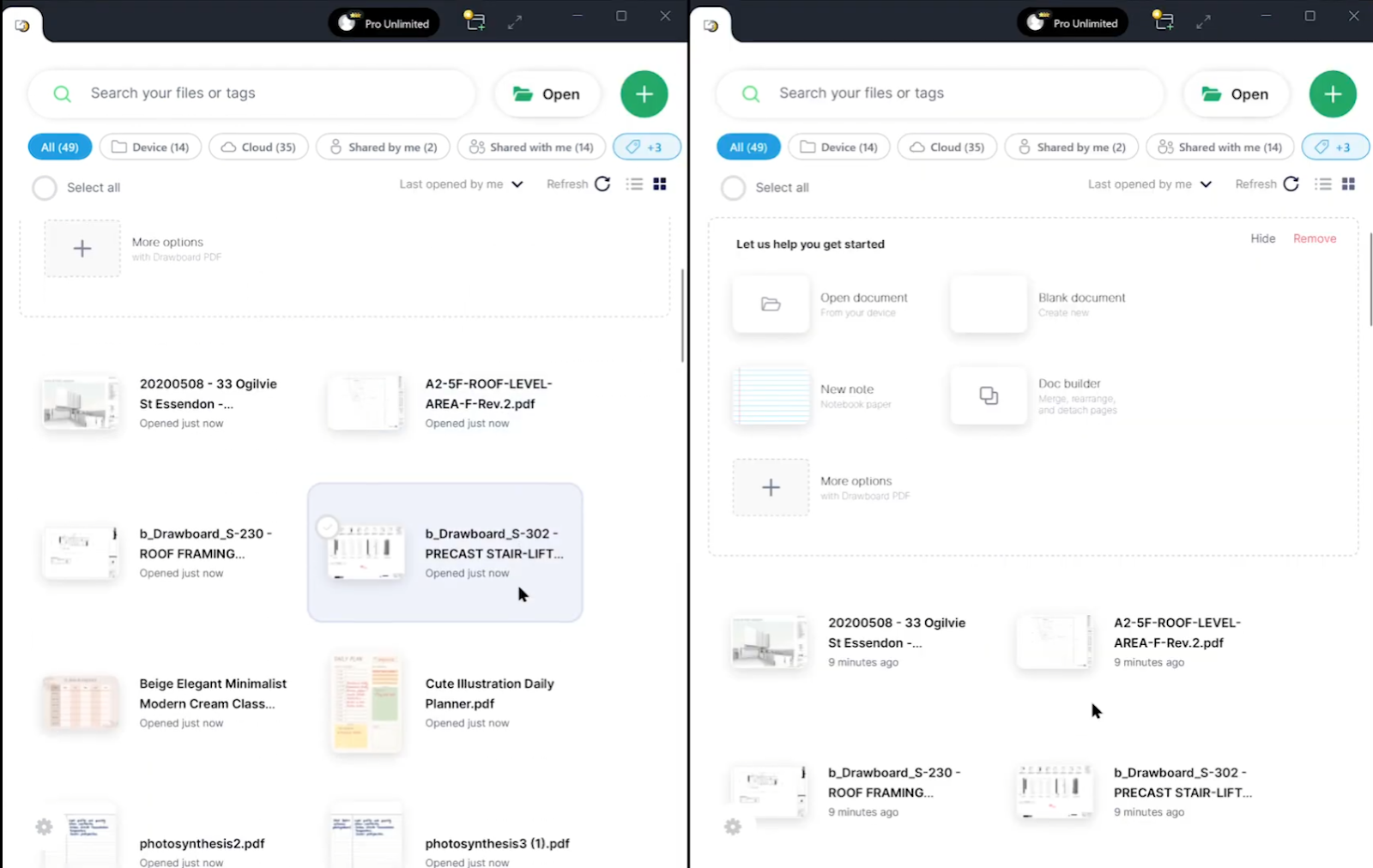
On iPad, with Split Screen enabled, drag each instance of Drawboard PDF onto its side to view both at once.
With windows arranged side by side, you can:
Each Drawboard PDF window gives you a complete, independent workspace. You can mark up one document with ink annotations while using shapes and callouts on another. You can even run Document Builder workflows in one window while reviewing in another.
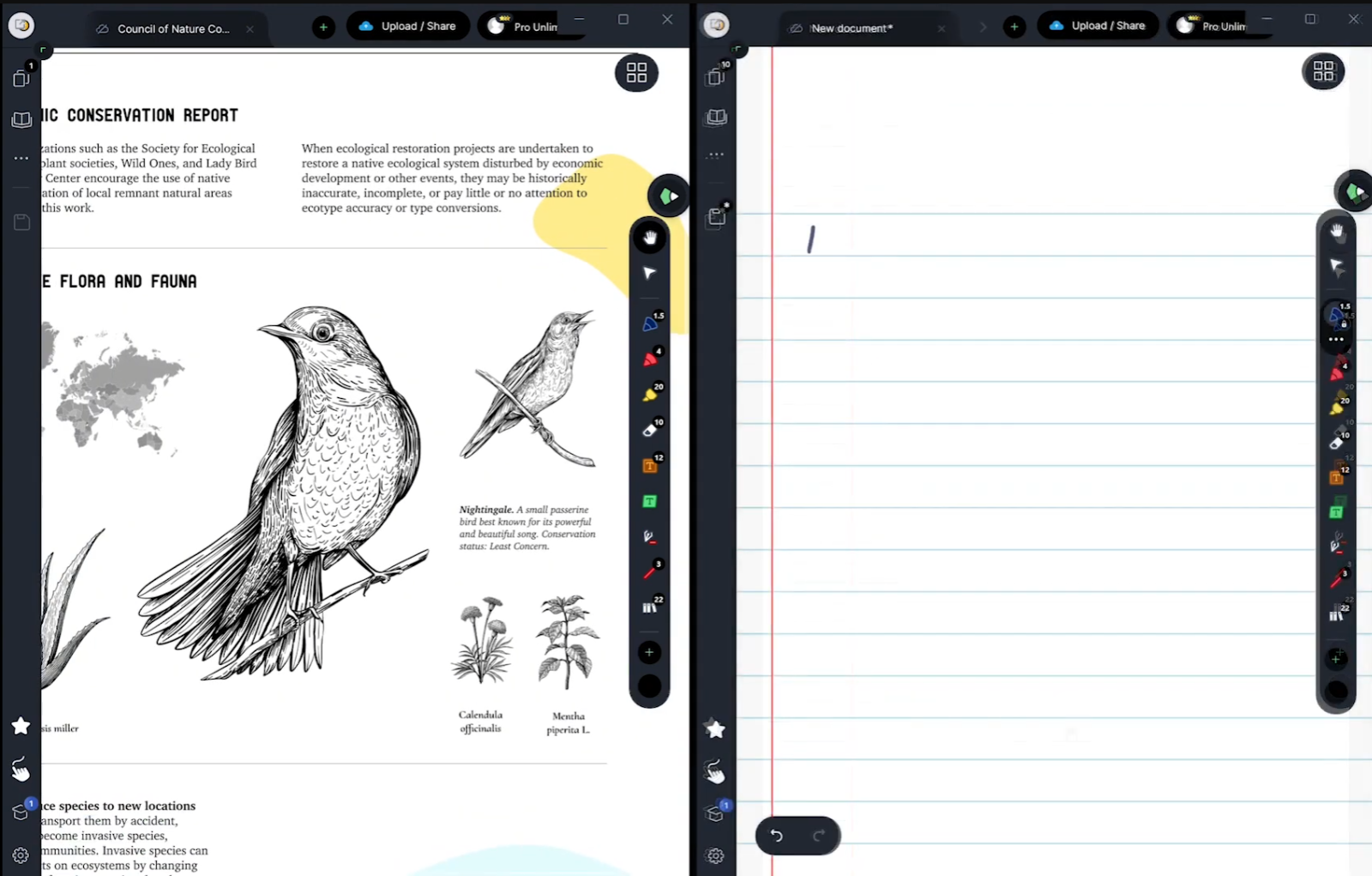
For a deeper walkthrough, check out this productivity tip on viewing and editing PDFs in multiple windows.
Document Builder is an intuitive workspace for manipulating entire documents, including merging files, splitting pages, rearranging page order, and deleting pages in bulk. It’s available to all Pro and Enterprise users on the Web and native apps.
.gif)
You can open Document Builder in two ways:
Once open, add your files by tapping Open file or by dragging and dropping PDFs directly into the workspace.
To rearrange pages within a document:
You can move multiple pages at once by selecting each page you want to reposition (selected pages show a green tick), then dragging them as a group.
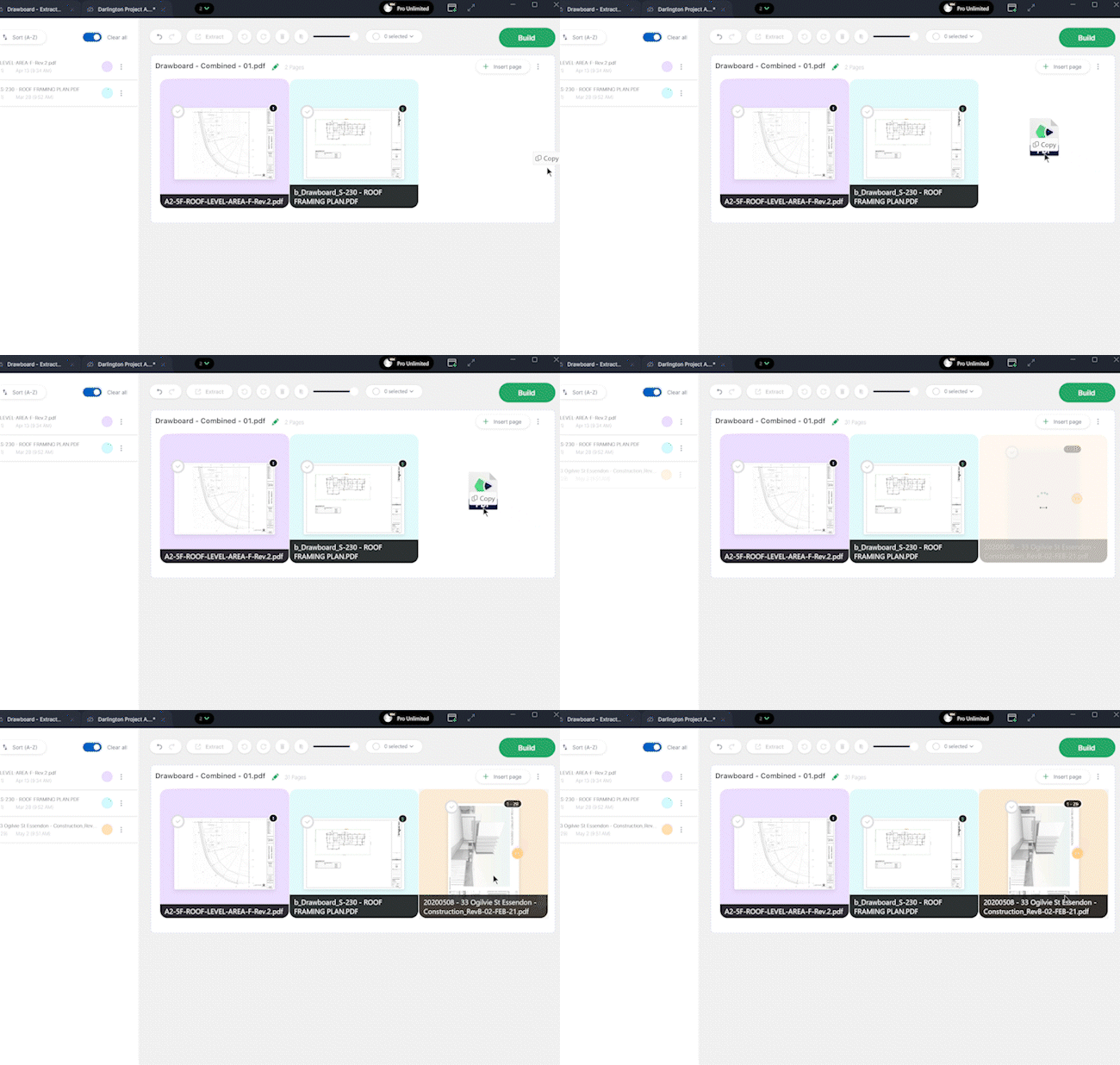
To combine multiple PDF files:
You can rearrange entire documents (in collapsed view) or individual pages (in expanded view) before building.
For a step-by-step guide, see the blog post on how to use Document Builder to merge, split, and reorganize PDFs.
If you’re specifically looking to combine files, check out how to merge multiple PDF files.
To split a PDF, use the extract function:
Note: The original document still contains the extracted pages. If you want them removed from the original, delete them by tapping the Delete Pages icon and then selecting Build.
To batch delete pages from a PDF:
This is much faster than deleting pages one at a time, especially in large drawing sets where you need to remove dozens of superseded sheets at once.
The Pages Panel gives you a thumbnail view of every page in your document, with multi-select support for quick page management. It’s available across all platforms.
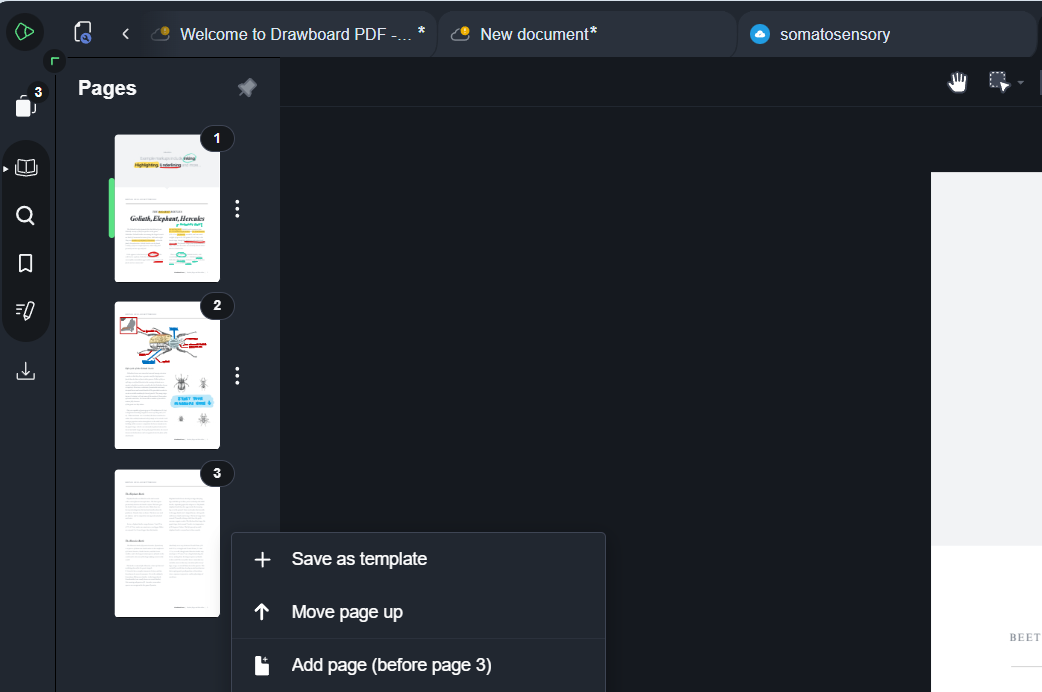
Open the Pages Panel from the left sidebar. You’ll see thumbnail previews of every page in your document. You can resize the panel by dragging its edge, and customize thumbnail size using the columns slider at the bottom of the panel.
There are several ways to select multiple pages:
Once you’ve selected pages, you can:
The ability to copy and paste pages between documents is particularly useful when you’re assembling a new drawing set from pages across multiple source files.
.gif)
You can adjust the Pages Panel to suit your workflow. Drag the columns slider at the bottom of the panel to change the number of thumbnail columns—use a single column for a detailed view, or multiple columns for a high-level overview of a large document. You can also enlarge or shrink the entire panel by dragging its edge.
Advanced Paste lets you apply the same annotation—or group of annotations—to multiple pages in a single action. It’s available to Pro Plus and Pro Unlimited users on the Windows app.

Start by creating the annotation you want to apply across pages. This can be any markup: a stamp, a text box, a shape, a signature block, a watermark—whatever you need on multiple pages.
Once your annotation is ready, select it using the Select tool. You can select an individual markup or a group of markups.
Your annotation appears on every page you selected. That’s it—no copying and pasting one page at a time.
Advanced Paste is ideal for repetitive annotation tasks that would otherwise take significant time:
For teams and individuals that frequently reuse the same annotations, Advanced Paste pairs well with Markup Library—save your most-used markups, then apply them across pages whenever you need them.
Working with multi-page PDFs doesn’t have to mean endless tab switching, one-page-at-a-time edits, or manual page management. Drawboard PDF gives you the tools to handle it all in one place—view documents side by side with Multi-Window, reorganize pages with Document Builder, manage pages with the Pages Panel, and apply annotations across pages with Advanced Paste.
Whether you’re reviewing construction drawings, taking notes from lecture slides, or anything in between, these features work together to streamline the way you work with PDFs.
Ready to work smarter? Download Drawboard PDF for free and see how much time you save on your next multi-page project.
The best tool depends on what you need to do. For viewing and marking up multiple PDFs side by side, rearranging and merging pages, and applying annotations across pages in bulk, Drawboard PDF offers a complete toolkit with Multi-Window, Document Builder, Pages Panel, and Advanced Paste. Most competing tools handle a few of these tasks but not all four natively. If you’re evaluating options, check out this roundup of the top PDF editors for Windows.
Yes. In Drawboard PDF, you can batch edit in several ways. Advanced Paste lets you apply annotations to multiple pages at once (all pages, even, odd, or a custom range). Document Builder lets you rearrange, merge, split, duplicate, and delete pages in bulk. And the Pages Panel supports multi-select for extracting, deleting, and copying pages across documents.
Use Multi-Window. Click the Open New Window icon in the top navigation bar (or press Ctrl + N), then open a different PDF in each window. Use the Windows snap feature (Windows key + Left/Right arrow) to arrange them side by side. Each window gives you the full Drawboard PDF toolset independently.
Yes, all of the full features in this article require at least a Pro Lite plan. However, our free PDF tools cover many of the same Document Builder functions—extracting PDF pages, merging PDFs, splitting PDFs, and more—with no account, download, or paid subscription required.
Yes. From the Pages Panel, select the pages you want to copy, tap Copy (or right-click and select Copy selected pages), navigate to the destination document, right-click in the Pages Panel where you want the pages, and tap Paste here. You can also use Document Builder to merge pages from multiple source files into a single document.
Working with multi-page PDFs usually means a lot of switching—between tabs, between documents, and between tools.
Mark up an architectural drawing while referencing the spec speech and you're constantly clicking back and forth. Grading a paper requires jumping between the submission and your rubric with each question or section. Cross-referencing contract versions means constantly reorienting yourself every time you switch so you don’t miss important details.
Drawboard PDF gives you a better way. With Multi-Window, Document Builder, the Pages Panel, and Advanced Paste, you can view, edit, rearrange, annotate, and manage multiple PDF pages at once—all from a single app.
Here’s how each feature works and when to use it.
Multi-Window lets you open more than one Drawboard PDF canvas at the same time. Each window operates independently, with access to the full markup toolset—pressure-sensitive ink, annotations, shapes, text, and more.
Multi-Window is available for Pro Plus, Pro Unlimited, and Enterprise users in the Windows app. You can also simulate Multi-Window with two separate instances of Drawboard PDF in your web browser or using Split Screen on your iPad.
There are two quick ways to open a new window:
A new Drawboard PDF window will open with your Dashboard in view. From there, open whatever document you need.
You can also open a specific tab into its own window: right-click the tab in the top menu and select Open in New Window. Or tap the plus icon in the top menu and choose Open in New Window.
Once you have two or more windows open, arrange them for maximum visibility. Use the Windows snap feature (press the Windows key + Left or Right arrow) to split your screen into halves. If you’re working on two monitors, drag each window to a separate display for a full-screen view of both documents.
On iPad, with Split Screen enabled, drag each instance of Drawboard PDF onto its side to view both at once.
With windows arranged side by side, you can:
Each Drawboard PDF window gives you a complete, independent workspace. You can mark up one document with ink annotations while using shapes and callouts on another. You can even run Document Builder workflows in one window while reviewing in another.
For a deeper walkthrough, check out this productivity tip on viewing and editing PDFs in multiple windows.
Document Builder is an intuitive workspace for manipulating entire documents, including merging files, splitting pages, rearranging page order, and deleting pages in bulk. It’s available to all Pro and Enterprise users on the Web and native apps.
You can open Document Builder in two ways:
Once open, add your files by tapping Open file or by dragging and dropping PDFs directly into the workspace.
To rearrange pages within a document:
You can move multiple pages at once by selecting each page you want to reposition (selected pages show a green tick), then dragging them as a group.
To combine multiple PDF files:
You can rearrange entire documents (in collapsed view) or individual pages (in expanded view) before building.
For a step-by-step guide, see the blog post on how to use Document Builder to merge, split, and reorganize PDFs.
If you’re specifically looking to combine files, check out how to merge multiple PDF files.
To split a PDF, use the extract function:
Note: The original document still contains the extracted pages. If you want them removed from the original, delete them by tapping the Delete Pages icon and then selecting Build.
To batch delete pages from a PDF:
This is much faster than deleting pages one at a time, especially in large drawing sets where you need to remove dozens of superseded sheets at once.
The Pages Panel gives you a thumbnail view of every page in your document, with multi-select support for quick page management. It’s available across all platforms.
Open the Pages Panel from the left sidebar. You’ll see thumbnail previews of every page in your document. You can resize the panel by dragging its edge, and customize thumbnail size using the columns slider at the bottom of the panel.
There are several ways to select multiple pages:
Once you’ve selected pages, you can:
The ability to copy and paste pages between documents is particularly useful when you’re assembling a new drawing set from pages across multiple source files.
You can adjust the Pages Panel to suit your workflow. Drag the columns slider at the bottom of the panel to change the number of thumbnail columns—use a single column for a detailed view, or multiple columns for a high-level overview of a large document. You can also enlarge or shrink the entire panel by dragging its edge.
Advanced Paste lets you apply the same annotation—or group of annotations—to multiple pages in a single action. It’s available to Pro Plus and Pro Unlimited users on the Windows app.
Start by creating the annotation you want to apply across pages. This can be any markup: a stamp, a text box, a shape, a signature block, a watermark—whatever you need on multiple pages.
Once your annotation is ready, select it using the Select tool. You can select an individual markup or a group of markups.
Your annotation appears on every page you selected. That’s it—no copying and pasting one page at a time.
Advanced Paste is ideal for repetitive annotation tasks that would otherwise take significant time:
For teams and individuals that frequently reuse the same annotations, Advanced Paste pairs well with Markup Library—save your most-used markups, then apply them across pages whenever you need them.
Working with multi-page PDFs doesn’t have to mean endless tab switching, one-page-at-a-time edits, or manual page management. Drawboard PDF gives you the tools to handle it all in one place—view documents side by side with Multi-Window, reorganize pages with Document Builder, manage pages with the Pages Panel, and apply annotations across pages with Advanced Paste.
Whether you’re reviewing construction drawings, taking notes from lecture slides, or anything in between, these features work together to streamline the way you work with PDFs.
Ready to work smarter? Download Drawboard PDF for free and see how much time you save on your next multi-page project.
The best tool depends on what you need to do. For viewing and marking up multiple PDFs side by side, rearranging and merging pages, and applying annotations across pages in bulk, Drawboard PDF offers a complete toolkit with Multi-Window, Document Builder, Pages Panel, and Advanced Paste. Most competing tools handle a few of these tasks but not all four natively. If you’re evaluating options, check out this roundup of the top PDF editors for Windows.
Yes. In Drawboard PDF, you can batch edit in several ways. Advanced Paste lets you apply annotations to multiple pages at once (all pages, even, odd, or a custom range). Document Builder lets you rearrange, merge, split, duplicate, and delete pages in bulk. And the Pages Panel supports multi-select for extracting, deleting, and copying pages across documents.
Use Multi-Window. Click the Open New Window icon in the top navigation bar (or press Ctrl + N), then open a different PDF in each window. Use the Windows snap feature (Windows key + Left/Right arrow) to arrange them side by side. Each window gives you the full Drawboard PDF toolset independently.
Yes, all of the full features in this article require at least a Pro Lite plan. However, our free PDF tools cover many of the same Document Builder functions—extracting PDF pages, merging PDFs, splitting PDFs, and more—with no account, download, or paid subscription required.
Yes. From the Pages Panel, select the pages you want to copy, tap Copy (or right-click and select Copy selected pages), navigate to the destination document, right-click in the Pages Panel where you want the pages, and tap Paste here. You can also use Document Builder to merge pages from multiple source files into a single document.


We are a PDF and collaboration company. We believe that creating more effective connections between people reduces waste.
Our best work has been overtaken by busywork. That’s why we’ve created ways to help people get back to working wonders without any paper in sight.
Drawboard PDF lets you mark up and share with ease, and Drawboard Projects brings collaborative design review to architecture and engineering teams.
At Drawboard, we work our magic so our customers can get back to working theirs.
We are a PDF and collaboration company. We believe that creating more effective connections between people reduces waste.
Our best work has been overtaken by busywork. That’s why we’ve created ways to help people get back to working wonders without any paper in sight.
Drawboard PDF lets you mark up and share with ease, and Drawboard Projects brings collaborative design review to architecture and engineering teams.
At Drawboard, we work our magic so our customers can get back to working theirs.


